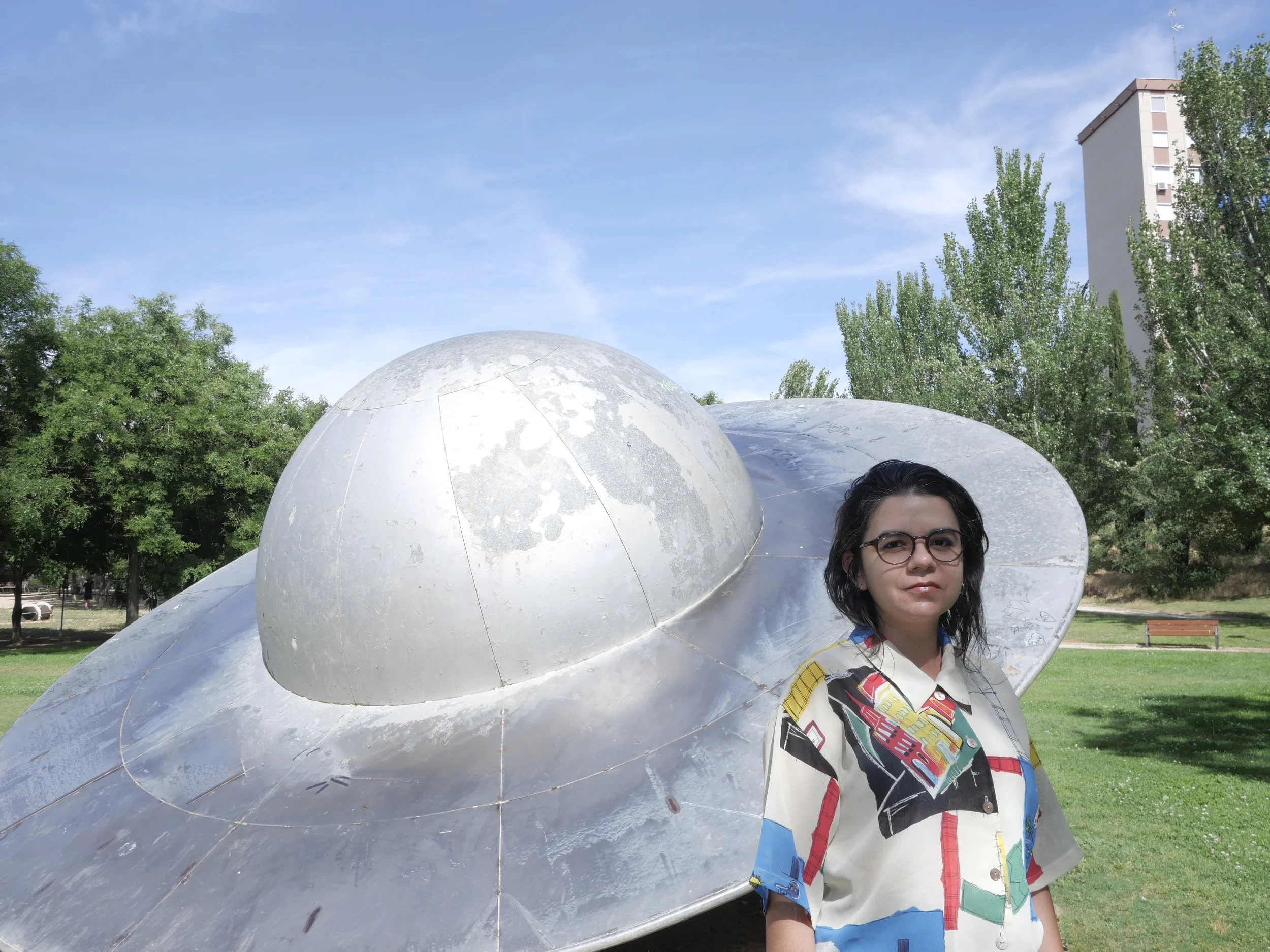
Isabel Arciniegas Guaneme
Isabel Arciniegas Guaneme is an interactive designer and Ph.D. candidate in Anthropology at the New School for Social Research. Her research examines how the concept of peace is being articulated in Colombia when it is extended to nonhuman beings.
Isabel Arciniegas Guaneme is an interaction designer and Ph.D. candidate in Anthropology at The New School for Social Research. Her research examines how the concept of peace is being articulated in Colombia when it is extended to nonhuman beings.
Her academic and fiction work has been published in Springer Nature, Plataforma Latinoamericana de Humanidades Ambientales, and in literary independent presses in Colombia. She also holds a practice as a transdisciplinary designer for small projects, experimenting at the intersection of the skills of reason and the logics of sensation.
Isabel’s dissertation, On the Nature of Peace, examines how the Colombian state discourse of “Making Peace with Nature” has been put into practice since the immediate aftermath of the 2016 Peace Agreement with the FARC guerrilla. Revolutionary in its promise to redefine peace, this discourse positioned the nonhuman as a victim in causal narratives of violence that may reveal new horizons for nonviolent realities. Thirteen months of multi-sited fieldwork confirmed the promise of this discourse while also revealing the limitations and contestations in its enactment. Isabel’s interlocutors positioned nonhumans, indifferent to human politics, at the center of productive projects aimed at sustaining human livelihoods, yet these efforts rarely endured over time; as powerful symbols of collective identity, though such enactments remained entangled with violence; as beings that suffer and should be listened to, but their inaudibility is constrained by epistemological limits of knowing; and as a source of norms for human conduct, yet a longing for the comforts of human infrastructure continually resurfaces. Amid this complicated landscape, the struggle for finding ways of coexistence persists. Isabel's dissertation offers an ethnography of peace as a tension between experience and expectation, asking what it means to coexist with nonhumans.
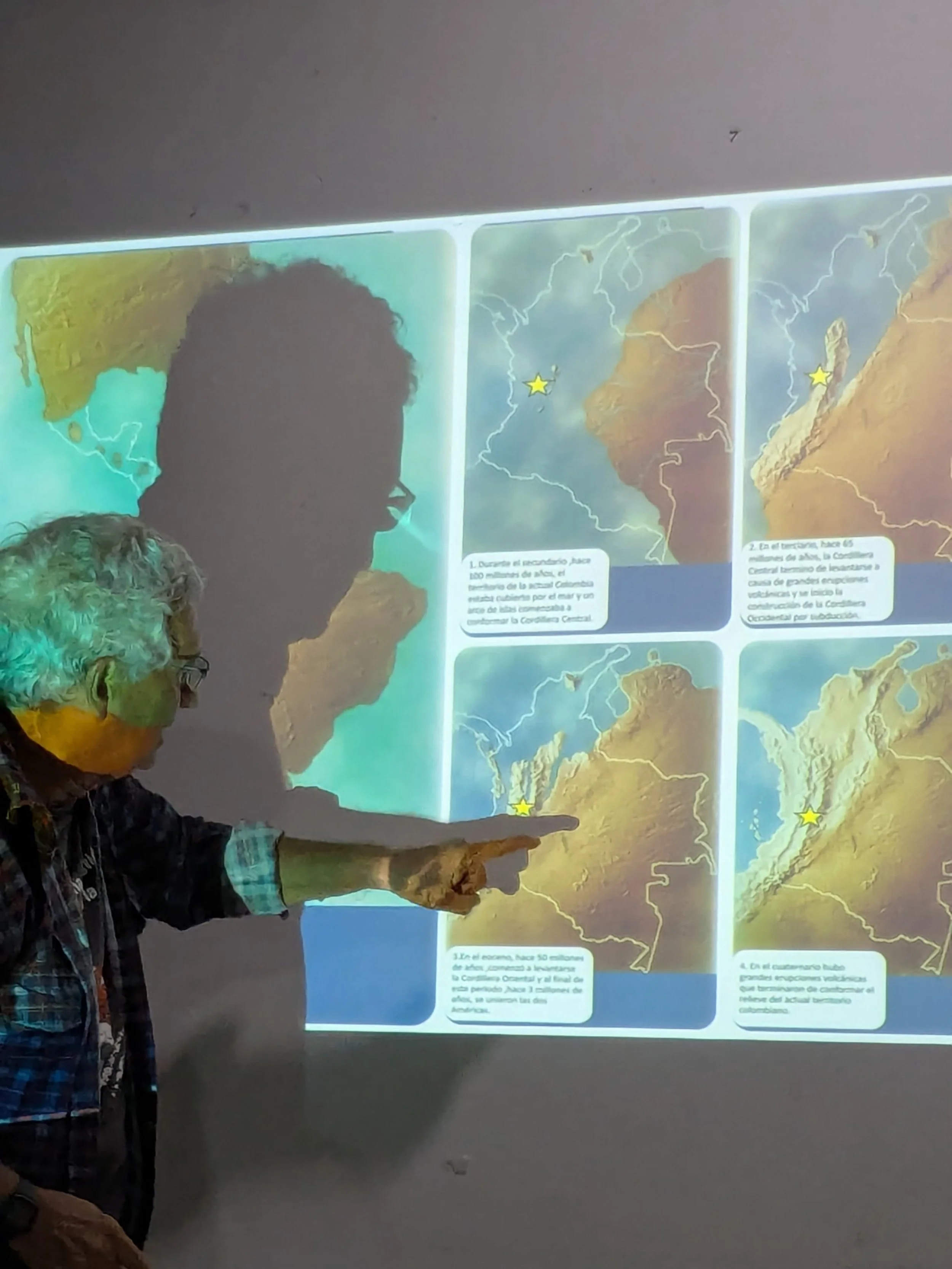
At GIDEST, Isabel will be working on a chapter based on ethnographic material gathered with a former commissioner of the Colombian Truth Commission. His work, pioneering in the conceptual frameworks of truth commissions, has advanced the idea that natural beings can be understood as subjects capable of suffering. The chapter traces this shift in his thinking, exploring what unfolds from the idea of listening to the suffering of trees. Although his efforts are always constrained by epistemological uncertainties and the limits of knowing, they challenge the capacity of transitional justice systems to apprehend violence that unfolds over long temporalities, as well as its assumption of the human body as the sole site worthy of audibility.